
Criticism of the government in media and conversation is abundant – people seem all too happy to discuss governmental shortcomings or overreach, mistakes and inefficiencies. Yet corporate business enterprises are full of the same problems, and indeed are much more directly responsible for environmental damage, widespread poverty, and any number of other social and economic problems. How is it then that we don’t hear of all this on the news every day, or that our neighbors aren’t discussing the latest mistakes of Apple or the inefficiencies of Blackwater?
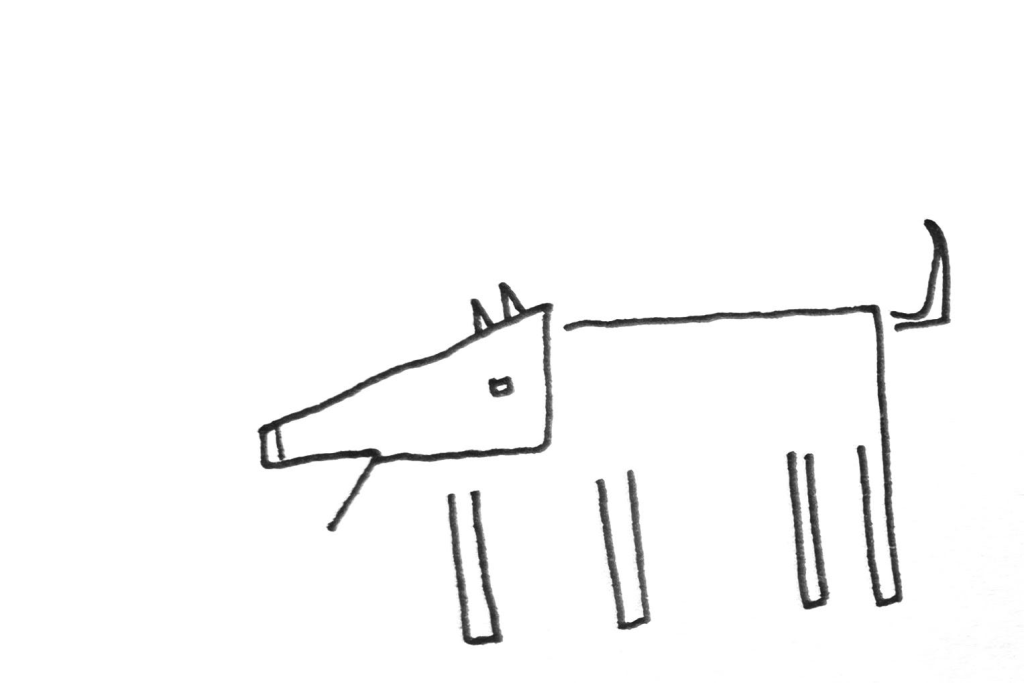
There are of course a variety of answers to this question, from corporate control of the media to the sense of powerlessness people have in the face of corporate cruelties. Here I will add one more explanation to the list: an explanation in terms of teleology. Consider this – if a tiger eats a farmer’s goats, one can hardly blame the tiger. Yet if a dog bites its owner, we say it’s a bad dog. How can we account for this difference?
One answer comes from Aristotle, who explains that these different creatures each have a different telos. A tiger’s telos (sometimes translated as ‘purpose’) is to be a wild predator. That’s what comes naturally to it. In fact, we might even call a tiger that was a bad predator a bad tiger, since it is failing to live up to its nature. By contrast, a dog’s telos is to be its owner’s best friend and faithful companion. When a dog bites us then, it is failing this telos and thus we can rightfully call it a bad dog.
Whatever one might think of the concept of telos or teleology at large, it’s hard to deny that this way of thinking is embedded in everyday thought and language. People make evaluations of different entities based on the nature and purpose they ascribe to those things. They debate what those purposes are in order to find alignment on criteria for evaluation. And since our task here is to explain why governments are so often targets of criticism, while corporations and business enterprises tend to be let off, it is sufficient to allow that people think in these terms, without having to presume that the material world is truly purposive in some metaphysical sense.
So what, then, is the telos of a corporation or business enterprise? That’s easy – businesses exist to make a profit. Whatever fancy words they may use to cloud their mission, the ultimate goal of every business, and especially of every publicly traded company on a stock exchange, is to make a profit. A business is thus good or bad to the extent that it succeeds in making a profit, and any other externalities like environmental damage, social problems, etc., aren’t important in that evaluation.
For this reason it is in some ways just senseless to say that Google is a bad company because it spies on all its customers. Indeed, its spying is exactly why Google is profitable and thus the very root of its goodness. So while we may not like that Google spies, we can’t blame the company for this. The company, like a tiger, is just out for itself, and can’t really be blamed for whatever else happens on the way.
Contrast this now with governments. The telos of a government is to improve the lives of its constituents. Though what exactly ‘improve’ means here may be open for debate, it’s obvious that a government is good if it makes our lives better, and bad if it fails to do so. This means that a government that causes mass poverty or despoils the environment is a bad government because it is failing to live up to its purpose, the telos that justifies its very existence. Like a beloved dog, the government is supposed to be our friend, so we get upset when it hurts us.
The different telos of big businesses and government thus generate quite different standards of evaluation, such that governments are held responsible for every ill in society, while businesses get a free pass as long as they turn a profit. Accordingly, the news and everyday conversation are full of criticisms of governments as they fail to meet this high standard, and they stay relatively quiet about corporations despite the fact that these corporations are directly responsible for almost all the problems that the government fails to solve (a failure that is largely due to corporate influence, I might add). But it’s important to remember that the only reason criticism of the government is even possible is because government itself is a fundamentally good thing, an entity whose very existence is predicated on an attempt to improve human lives. It’s this lofty aspiration that makes criticism of governments legitimate, while corporations, having only selfish greed as their motivation, can’t be held morally accountable when they resort to cruel and harmful means in the pursuit of that goal.
With this said, we can consider our main task complete – we have provided at least one more explanation for the persistent criticism of governments despite silence with respect to much more egregious acts on the part of business enterprises. This discussion, however, leaves us with a crucial question: to whom would we rather entrust the fate of society, the wild tigers or our faithful dogs?
Thank you to Sean Sanders for discussion that helped develop the ideas presented here.
 aslidsiksoraksi
Leave a comment