
[Disclaimer: this article contains spoilers for the Barbie movie and Hegel’s entire body of work]
The Barbie movie is one of the rare movies that manages to be both smart and fun at the same time. Any movie with such explicit political and philosophical themes invites us to explore it ourselves, so today I thought it might be interesting to think through a dialectical interpretation of the movie.
Before we get going, let’s just quickly set up the concept of the dialectic, as presented in the work of the German philosopher G. W. F. Hegel. According to Hegel, the dialectic is the fundamental pattern that governs everything from thought to history to the physical world. We don’t have to worry about all that though – for us it’s just important to grasp what the pattern of the dialectic is.
The pattern starts with any given concept or idea, which Hegel calls the thesis. For our example, we can start with the idea that freedom means a lack of regulation or oversight – freedom as ‘no one tells me what to do.’ Next, this idea naturally creates or transforms into its own opposite, or antithesis. In our example, consider that if there were absolutely no regulation, then we’d all be at the mercy of whoever had the biggest guns, constantly living in fear of violence or deception from our neighbors, unable to freely do what we want or pursue our own goals. In short, the naive idea of freedom as a lack of regulation actually creates a world in which we are deeply unfree. Finally, the dialectic resolves itself into a union (or ‘synthesis,’ to use Hegel’s term) of the two opposites that combines both of their elements. In the case of freedom, this means realizing that if we are to freely pursue our goals, we will need some regulation in place to order the world and make that possible. In this way, while a good balance still needs to be struck, well-built laws actually empower us, allowing us to do more and thus making us more free, not less so.

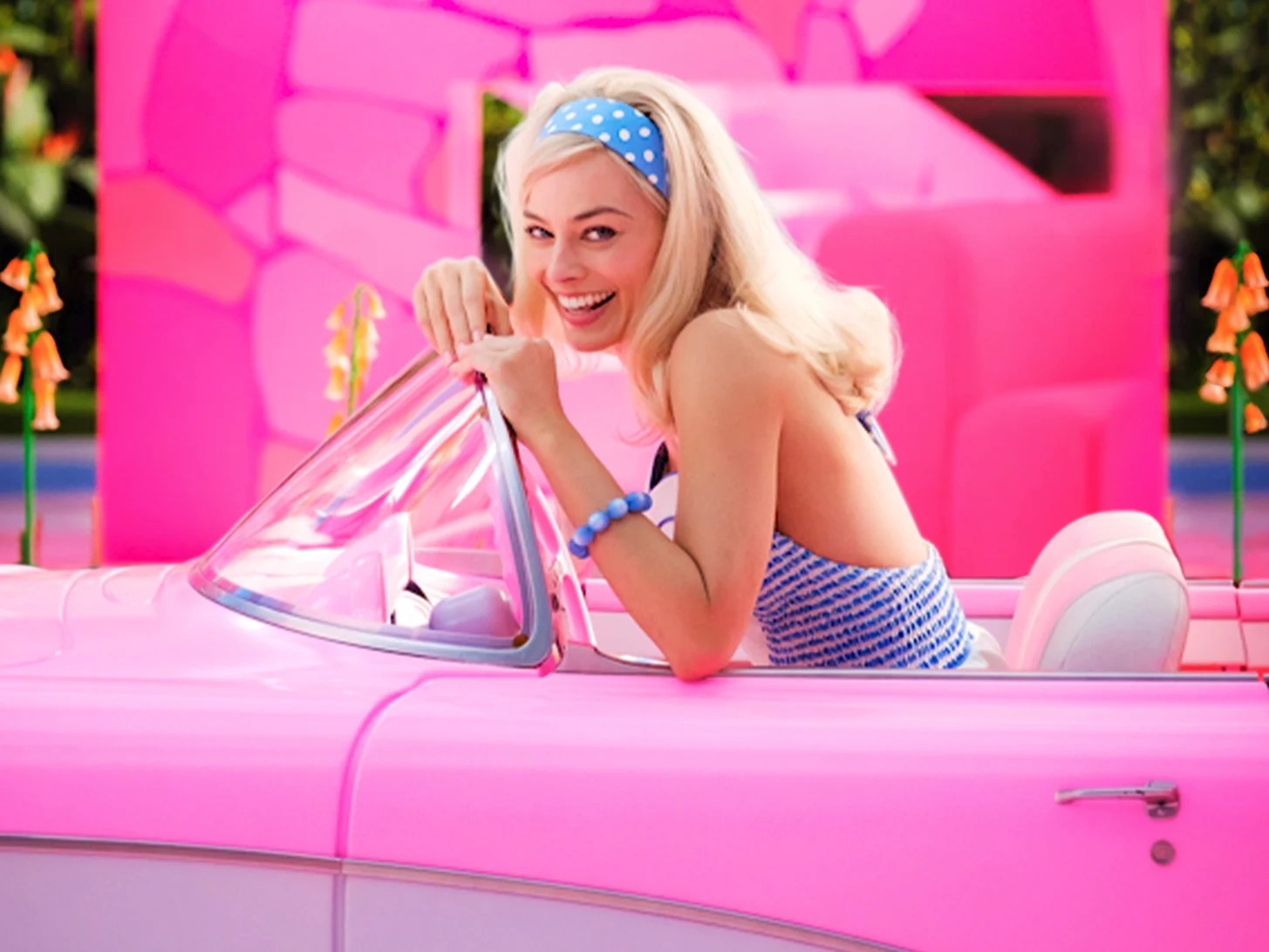
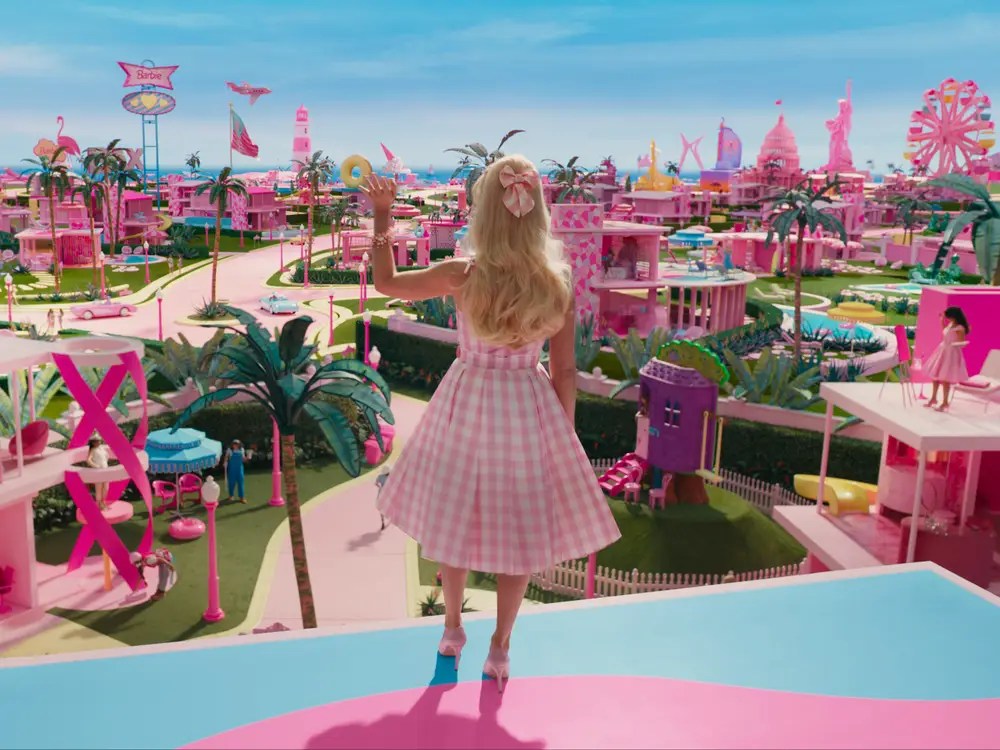
So how does this show up in the Barbie movie? This pattern actually shows up everywhere according to Hegel, so you can really take your pick, but I’ll focus on one major example of it to start with. In the movie, all the Barbies and Kens and other toys live in a world called Barbie Land. That world’s defining trait, aside from the fact that the characters follow toy-based laws of physics, is that gender roles are reversed. Where the real world is patriarchal, Barbie Land is a matriarchy, with a black woman president, all-female Supreme Court, and women leading the way in every field. And the men, as embodied in the character of Ken, are a caricature of how women are conceived of in patriarchy. Ken “only has a good day when Barbie looks at him” because he is, after all, merely a satellite, existing only to adorn her. Throughout the film he is portrayed as a bit vapid, image-obsessed, and really having no self outside of his relation to Barbie, in much the same way as media often portrayed (and continues to portray) women. Fun fact – if you apply the Bechdel test to the film with the genders reversed, the film will fail.
This is our starting point for the dialectic. Barbie Land is a matriarchy, though if we were talking about a real-world political point, the Barbie Land society is essentially standing in for patriarchy, and the dialectic that follows is the dialectic that actually did happen in history with feminism.
So with the thesis set up, now we look for the antithesis. Well, in Barbie Land, Ken is not happy. He is merely a side character, with no real identity outside of Barbie, never able to be truly loved in the way that he loves her. So when he goes to the Real World and discovers that it’s actually men who rule the world, he is naturally overjoyed and eager to put this into practice back in Barbie Land. Just as in the Hegelian dialectic, this is not a matter of random chance or Ken just being a dummy. Actually, Barbie Land has oppressed Ken to the point where he has to try and enact patriarchy. All he’s known is lopsided systems of oppression, and after years on the bottom, all he can imagine is getting on top. In this way, Barbie Land’s matriarchy naturally flows into its antithesis, the aggressive imposition of patriarchy.
The movie’s climax, however, resolves the tension between these two opposites by bringing them into harmony (or trying, at least). Barbie actually uses a very dialectical strategy against Ken, foiling his plan by playing on the inherent toxicity of patriarchy. Despite the new self-worth they found by oppressing women, the Kens are still fundamentally unable to see themselves as valuable. All they did was switch from basing their value on the opinions of Barbies to basing it on the opinions of other Kens. So when the Barbies play on that by pitting the Kens against each other, they are able to wrest back control of Barbie Land. In doing so, they lay bare the weaknesses not just of naïve patriarchy (represented by Barbie Land’s original system) but also of naïve feminism (represented by Ken’s version of patriarchy).
Instead, the final synthesis is one where people of all genders are able to find their worth internally, without a need to put others down. It’s a world where some nights are girls’ night and other nights are boys’ night and yet other nights are co-ed. It’s a world where Ken, just Ken, is enough.
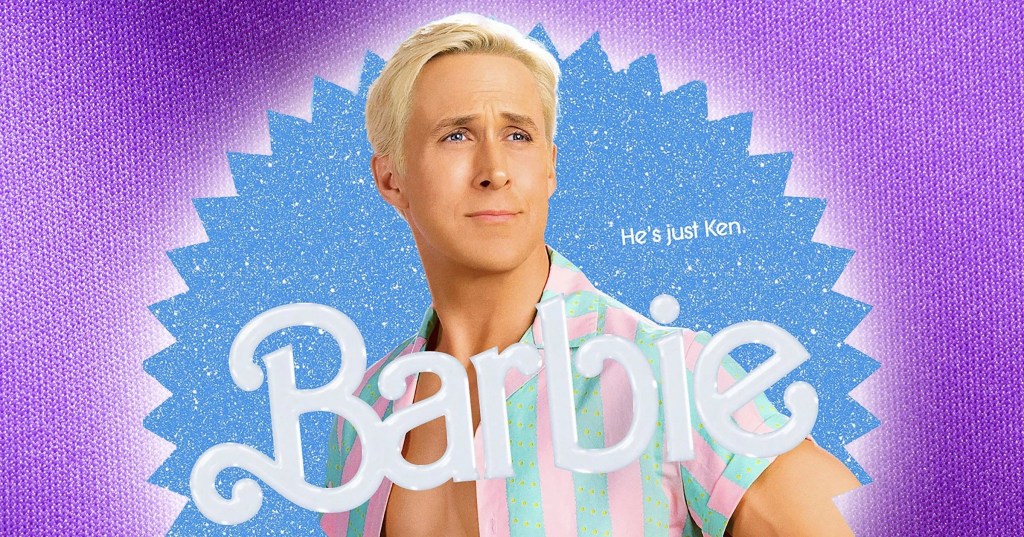
Let’s pause here though to reflect on this. If the movie is to be understood this way, it raises a lot of questions about some of the choices the writers and directors made. After all, if Barbie Land is the inverse of the real world, then Barbie represents patriarchy and Ken represents feminism. This makes Barbie more of a villain and Ken more of a hero than one may initially have suspected. Parts of the ending, like when the Barbies deny the Kens’ request for a Supreme Court justice and are generally still hesitant and dismissive about the Kens having any real power, may seem like a cool moment of girl power, but in light of what Barbie and Ken represent, they’re actually just brutally misogynistic. If the film was meant to show us a happy ending, it would have shown us equality at the end. Instead, it shows us a gender-flipped version of our present day: a world where the Kens have it a little better, but they still have to struggle with all the contradictions of masculinity in the same way that real world women struggle with all the contradictions of femininity.
I’m not sure what the writers were hoping for here, and in general their inversion of gender roles gets a bit tangled toward the end of the film. The authors seem caught between wanting characters who appear female (i.e., the Barbies) to emerge victorious and heroic on the one hand, and the uncomfortable fact that those same characters are standing in for men and patriarchy on the other. One particular example comes when America Ferrera’s character Gloria gives a powerful speech about the wild and contradictory expectations our society puts on women. The speech is great, but she says all this to the Barbies. The Barbies would not be able to identify with the frustrations of real-world women – until very recently they have never been anything but perfect and dominant. Remember, they are the stand-in for the real world’s men, not its women. It is the Kens that would better understand Gloria’s feelings here, but they never hear the speech, and in the end the Barbies still seem reluctant to acknowledge that they should have any meaningful role in society.
Of course, none of this even touches on another major dialectic of the movie, which is the one that runs between the fake Barbie world and the real world. Barbie is initially happy in her perfect plastic world (thesis), and then completely unhappy in the deeply flawed real world (antithesis). The fact that the final scenes of the movie enact a synthesis by focusing on her willingly choosing to become a real human being, with all the problems and messiness that comes with it, means that perhaps this is really the pivotal dialectic of the film. If Barbie represents patriarchy and masculinity (as she did back in Barbie Land), this transition could be understood to represent the transition men have to go through as they leave patriarchy behind. At first, men are blissfully ignorant in their patriarchy, and deeply opposed to feminism since it means losing all their power. But in the end, patriarchy is just as naive and toxic. The true solution is to embrace a more equal and understanding relationship between the sexes, even if it gets messy sometimes.
I’ve probably rambled enough by now though, so I’ll leave you with a final thought. Despite the clear feminist message, by inverting the gender roles, the Barbie movie actually centers male experiences and sends a somewhat equivocal message about feminism. Barbie, who was hitherto the very ideal of femininity, ends up representing men as they learn to navigate the world without the handrails of patriarchy. The Barbie Land society, which could have embodied all the excellences of women, really just recreates the problems of patriarchy and dismissively tosses out the Kens’ requests for equality even after all their supposed growth. For all its pink, its girl power talk, and its eloquent speeches about the contradictions of womanhood, the movie doesn’t truly succeed in centering women. Instead its main character’s experience is very much the male experience, and the Kens, the characters who actually live lives like those of women under patriarchy, are mocked and oppressed.
P.S. I still enjoyed the movie and there are obviously other ways to interpret things so feel free to still find the film fun. I’d be interested in any other thoughts you may have about it. Thanks!
 aslidsiksoraksi
Leave a comment